


The Infinite Mirror: How Cellular Brain Atlas Redefines Human Consciousness
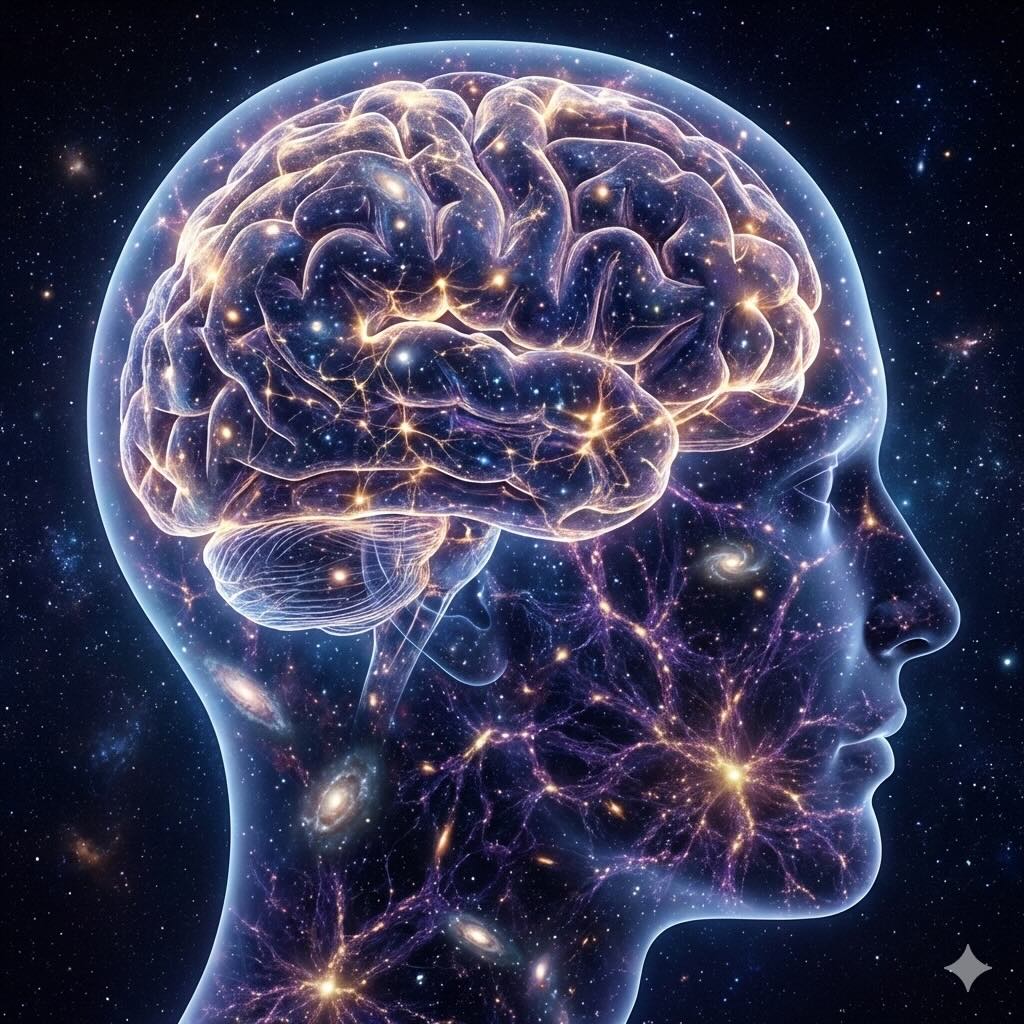
The activation of the JUPITER supercomputer in Jülich, Germany, at the dawn of 2026, has marked the exact moment when neuroscience transcended the boundaries of mere biology to become a documented form of mystical exploration. With a computational power previously deemed impossible, researchers involved in the final stages of the Human Brain Project have begun to map 86 billion individual neurons and their quadrillion synaptic connections, creating what is now globally recognized as the Cellular Brain Atlas. This achievement is far more than a triumph of engineering; it serves as the definitive scientific proof that our internal architecture possesses a complexity that mirrors the very structures of the galactic web. For those dedicated to spiritual evolution, this discovery effectively dismantles material reductionism, the outdated belief that the mind is a mere byproduct of chemical reactions. The data suggests that the brain does not simply produce thought as a muscle produces movement, but rather functions as a biological receiver of such immense sophistication that it resonates with the fundamental frequency of the universe itself.
The structural similarities revealed by the Atlas are staggering, showing that the distribution of matter in the neural network follows the same mathematical laws as the distribution of galaxies in the observable cosmos. This realization forces a radical shift in how we perceive our own consciousness, suggesting that looking inward is, in a very literal sense, the same as looking outward into the stars. Recent studies from the Salk Institute, published in these opening weeks of 2026, have provided the biological "why" behind this resonance, identifying the specific neural pathways activated by the experience of awe. They found that the feeling of wonder in the face of this vastness is not an abstract emotion or a poetic luxury, but a primary catalyst for neuroplasticity. When an individual experiences profound awe—whether through deep meditation, the observation of nature, or the contemplation of this new neural map—the brain triggers a massive release of neurotrophic factors that facilitate the growth of new synapses and the protection of existing neurons. This suggests that the human nervous system is biologically wired to seek out meaning and vastness as a survival mechanism.
In the high-performance culture of the past decade, we were told that the brain was a computer to be optimized, but the 2026 Atlas reveals it is more akin to an infinite landscape to be explored. This shift in perspective is crucial for anyone involved in personal growth, as it validates the ancient contemplative claim that the "kingdom of heaven" is within. The science now shows that we carry a physical infinity inside our skulls, and our mental health is directly tied to our ability to interface with that internal vastness. When we feel trapped, anxious, or small, it is often because we have restricted our awareness to a tiny fraction of our available neural territory. The Cellular Brain Atlas acts as a mirror, showing us that our capacity for thought, empathy, and connection is practically limitless. We are seeing a new "Science of Wonder" emerge, one that proves that a life lived without a sense of mystery is a life lived against the grain of our own biology.
The implications for daily practice are transformative, as the research indicates that intentionally cultivating states of "expansive consciousness" can physically remodel the brain’s architecture to be more resilient and creative. This is not a metaphor but a measurable physiological change documented by the latest fMRI-PET integrations. By engaging with the vastness revealed by the JUPITER supercomputer’s mappings, we aren't just learning about the brain; we are training the brain to recognize its own cosmic nature. This is the death of the "meat machine" theory of humanity. If the brain is a map of the universe, then the act of self-reflection becomes an act of universal exploration. The 2026 discoveries suggest that the next frontier of human evolution is not external—not Mars or the deep oceans—but the conscious navigation of the 86 billion neurons that form our internal galaxy. To live small is now a scientific error. To live with a sense of wonder is to align oneself with the very laws of nature that built the stars and the synapses alike.
The structural similarities revealed by the Atlas are staggering, showing that the distribution of matter in the neural network follows the same mathematical laws as the distribution of galaxies in the observable cosmos. This realization forces a radical shift in how we perceive our own consciousness, suggesting that looking inward is, in a very literal sense, the same as looking outward into the stars. Recent studies from the Salk Institute, published in these opening weeks of 2026, have provided the biological "why" behind this resonance, identifying the specific neural pathways activated by the experience of awe. They found that the feeling of wonder in the face of this vastness is not an abstract emotion or a poetic luxury, but a primary catalyst for neuroplasticity. When an individual experiences profound awe—whether through deep meditation, the observation of nature, or the contemplation of this new neural map—the brain triggers a massive release of neurotrophic factors that facilitate the growth of new synapses and the protection of existing neurons. This suggests that the human nervous system is biologically wired to seek out meaning and vastness as a survival mechanism.
In the high-performance culture of the past decade, we were told that the brain was a computer to be optimized, but the 2026 Atlas reveals it is more akin to an infinite landscape to be explored. This shift in perspective is crucial for anyone involved in personal growth, as it validates the ancient contemplative claim that the "kingdom of heaven" is within. The science now shows that we carry a physical infinity inside our skulls, and our mental health is directly tied to our ability to interface with that internal vastness. When we feel trapped, anxious, or small, it is often because we have restricted our awareness to a tiny fraction of our available neural territory. The Cellular Brain Atlas acts as a mirror, showing us that our capacity for thought, empathy, and connection is practically limitless. We are seeing a new "Science of Wonder" emerge, one that proves that a life lived without a sense of mystery is a life lived against the grain of our own biology.
The implications for daily practice are transformative, as the research indicates that intentionally cultivating states of "expansive consciousness" can physically remodel the brain’s architecture to be more resilient and creative. This is not a metaphor but a measurable physiological change documented by the latest fMRI-PET integrations. By engaging with the vastness revealed by the JUPITER supercomputer’s mappings, we aren't just learning about the brain; we are training the brain to recognize its own cosmic nature. This is the death of the "meat machine" theory of humanity. If the brain is a map of the universe, then the act of self-reflection becomes an act of universal exploration. The 2026 discoveries suggest that the next frontier of human evolution is not external—not Mars or the deep oceans—but the conscious navigation of the 86 billion neurons that form our internal galaxy. To live small is now a scientific error. To live with a sense of wonder is to align oneself with the very laws of nature that built the stars and the synapses alike.