


Hybrid Spirituality, AI, and Digital Communities Transform Global Faith
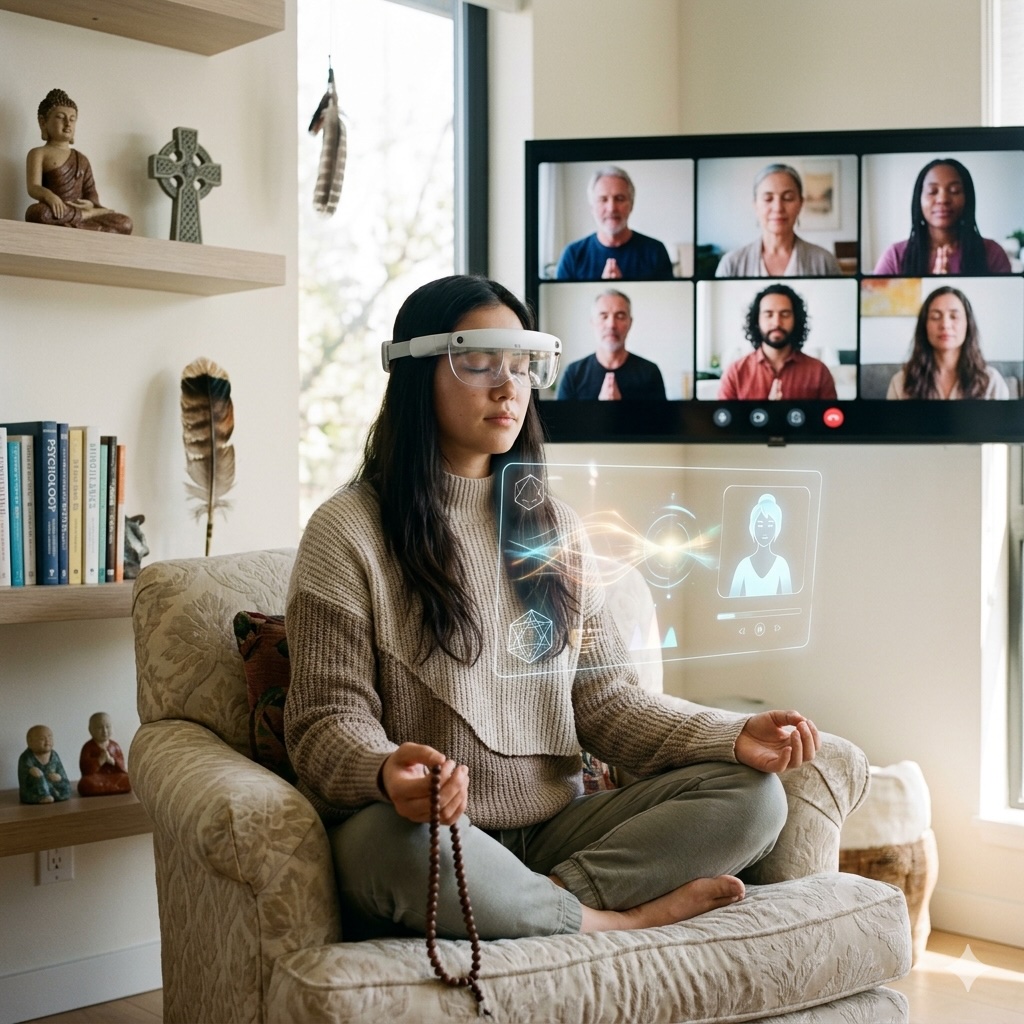
2026 marks a turning point in the history of contemporary spirituality. According to an in-depth analysis published on AscensionPulse, emerging spiritual trends are redefining how millions of people around the world seek meaning, connection, and transcendence. Three macro-trends dominate the landscape: hybrid spiritual practices, the convergence between mental health and spiritual wellness, and the integration of artificial intelligence into sacred experiences.
Hybrid practices represent the most significant phenomenon. Increasingly, people are rejecting the idea of choosing a single religious tradition. Instead, they create personalized spiritual paths that draw wisdom from multiple sources: Buddhist meditation, Christian contemplative services, indigenous wisdom teachings, and secular mindfulness practices coexist in the same individual journey. This movement reflects a fundamental shift in younger generations, who curate practices that resonate with their unique journey rather than inheriting a single religious identity.
Artificial intelligence is transforming spirituality in ways that seemed like science fiction five years ago. Meditation apps introduce millions of people to mindfulness practices they would never have discovered otherwise. AI now offers personalized spiritual guidance, analyzes dream patterns, and generates mantras based on individual energy signatures. Recent discussions at the Third Forum on Religious Freedom at Palazzo Chigi raised fundamental ethical questions: how to ensure that AI promotes authentic spiritual research without increasing proselytism or commercial manipulation?
The convergence between mental health and spiritual wellness is erasing the artificial barrier between these two dimensions. Therapists are increasingly incorporating meditation, mindfulness, and spiritual inquiry into their sessions. Meanwhile, spiritual teachers receive training in trauma-informed practices and mental health awareness. Scientifically validated studies demonstrate that meditation reduces anxiety and depression as effectively as medication for some individuals. Insurance companies are increasingly covering meditation classes and spiritual counseling.
According to ReligionUnplugged, five key trends will define religion and spirituality in 2026: the formal decline of religious affiliation while spiritual beliefs remain widespread, the impact of AI on faith, the growth of the global Muslim demographic, the rise of antisemitism, and the continued persecution of Christians in Nigeria. These factors intertwine, creating a complex and rapidly evolving global spiritual landscape.
Spiritual communities are transforming from centralized hierarchical structures into participatory distributed networks. Micro-communities and "spiritual pods" – intimate groups of 5-15 members – are replacing large congregations for many people, offering authentic connection, autonomy, and flexibility without rigid dogmas.
Hybrid practices represent the most significant phenomenon. Increasingly, people are rejecting the idea of choosing a single religious tradition. Instead, they create personalized spiritual paths that draw wisdom from multiple sources: Buddhist meditation, Christian contemplative services, indigenous wisdom teachings, and secular mindfulness practices coexist in the same individual journey. This movement reflects a fundamental shift in younger generations, who curate practices that resonate with their unique journey rather than inheriting a single religious identity.
Artificial intelligence is transforming spirituality in ways that seemed like science fiction five years ago. Meditation apps introduce millions of people to mindfulness practices they would never have discovered otherwise. AI now offers personalized spiritual guidance, analyzes dream patterns, and generates mantras based on individual energy signatures. Recent discussions at the Third Forum on Religious Freedom at Palazzo Chigi raised fundamental ethical questions: how to ensure that AI promotes authentic spiritual research without increasing proselytism or commercial manipulation?
The convergence between mental health and spiritual wellness is erasing the artificial barrier between these two dimensions. Therapists are increasingly incorporating meditation, mindfulness, and spiritual inquiry into their sessions. Meanwhile, spiritual teachers receive training in trauma-informed practices and mental health awareness. Scientifically validated studies demonstrate that meditation reduces anxiety and depression as effectively as medication for some individuals. Insurance companies are increasingly covering meditation classes and spiritual counseling.
According to ReligionUnplugged, five key trends will define religion and spirituality in 2026: the formal decline of religious affiliation while spiritual beliefs remain widespread, the impact of AI on faith, the growth of the global Muslim demographic, the rise of antisemitism, and the continued persecution of Christians in Nigeria. These factors intertwine, creating a complex and rapidly evolving global spiritual landscape.
Spiritual communities are transforming from centralized hierarchical structures into participatory distributed networks. Micro-communities and "spiritual pods" – intimate groups of 5-15 members – are replacing large congregations for many people, offering authentic connection, autonomy, and flexibility without rigid dogmas.