


Alchemy in the Gut: How the Microbiota Nourishes Our Happiness
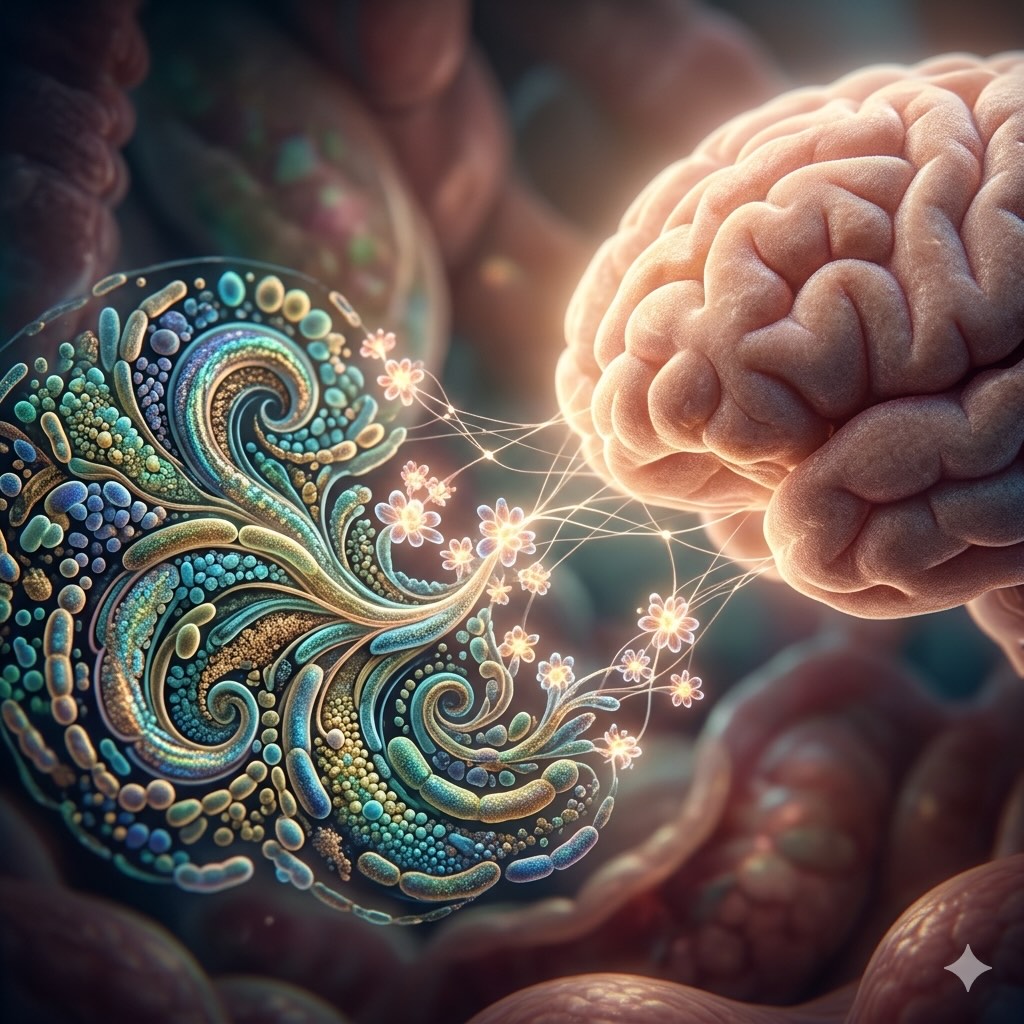
It is no longer merely a poetic suggestion or a metaphor tied to "gut feelings": our visceral sense of knowing now has a solid and fascinating biochemical foundation. Cutting-edge science, through recent publications in journals of the caliber of Nature Microbiology, has confirmed that the ecosystem of trillions of bacteria we harbor in our intestines — the microbiota — does not concern itself solely with digestion. It acts as a genuine endocrine and neurochemical organ, capable of influencing our thoughts and emotions. This revolutionary branch of knowledge, christened Psychobiotics, is demonstrating that our joy does not depend exclusively on mental processes, but also on the quality of life we offer our microscopic inner "guests."
The connection between what happens in the abdomen and what happens in the mind is mediated by the gut-brain axis, a two-lane biological highway in which the vagus nerve serves as the primary conductor of signals. The discovery that is reshaping the paradigm of well-being concerns the production of neurotransmitters: it is estimated that over 90% of serotonin — the hormone of serenity — and approximately 50% of dopamine, linked to motivation, are synthesized in the digestive tract through bacterial activity. For researchers, this means the gut is not a mere executor, but a co-pilot of our emotional stability, a true "biological compass" of good mood.
For those walking a path of mindfulness, this finding transforms the act of eating into a sacred ritual of inner care. Nourishing oneself is no longer a matter of counting calories, but a practice of biodiversity. Scientific evidence shows how a diet poor in fiber and rich in ultra-processed foods acts as a poison for "friendly" bacterial strains, triggering states of systemic inflammation that neurologists directly link to cognitive fog, anxiety, and a reduced resistance to stress.
Conversely, nourishing the microbiota with living, varied foods is the equivalent of cultivating an inner garden capable of independently producing peace and clarity of mind.
There are specific allies in this pursuit of biochemical joy. Bacterial strains such as Lactobacillus helveticus and Bifidobacterium longum have been identified for their ability to lower cortisol levels in the blood, acting as natural anxiolytics free of side effects. To activate this "inner pharmacy," psychobiotics recommends focusing on variety: fermented foods such as kefir and kimchi supply live probiotics, while the polyphenols found in dark cacao or berries act as prebiotics, selectively nourishing the bacterial species that protect our brain from the wear and tear of stress.
Embracing the psychobiotic revolution means recognizing that spirituality and biology are two sides of the same coin. Taking care of one's microbiota is an act of self-love that speaks the language of matter to reach the heights of the spirit. Every mindful meal thus becomes a unique opportunity to communicate to our nervous system that we are in balance, nourished, and safe — allowing our natural inclination toward joy to flourish from the very foundations of our being.
The connection between what happens in the abdomen and what happens in the mind is mediated by the gut-brain axis, a two-lane biological highway in which the vagus nerve serves as the primary conductor of signals. The discovery that is reshaping the paradigm of well-being concerns the production of neurotransmitters: it is estimated that over 90% of serotonin — the hormone of serenity — and approximately 50% of dopamine, linked to motivation, are synthesized in the digestive tract through bacterial activity. For researchers, this means the gut is not a mere executor, but a co-pilot of our emotional stability, a true "biological compass" of good mood.
For those walking a path of mindfulness, this finding transforms the act of eating into a sacred ritual of inner care. Nourishing oneself is no longer a matter of counting calories, but a practice of biodiversity. Scientific evidence shows how a diet poor in fiber and rich in ultra-processed foods acts as a poison for "friendly" bacterial strains, triggering states of systemic inflammation that neurologists directly link to cognitive fog, anxiety, and a reduced resistance to stress.
Conversely, nourishing the microbiota with living, varied foods is the equivalent of cultivating an inner garden capable of independently producing peace and clarity of mind.
There are specific allies in this pursuit of biochemical joy. Bacterial strains such as Lactobacillus helveticus and Bifidobacterium longum have been identified for their ability to lower cortisol levels in the blood, acting as natural anxiolytics free of side effects. To activate this "inner pharmacy," psychobiotics recommends focusing on variety: fermented foods such as kefir and kimchi supply live probiotics, while the polyphenols found in dark cacao or berries act as prebiotics, selectively nourishing the bacterial species that protect our brain from the wear and tear of stress.
Embracing the psychobiotic revolution means recognizing that spirituality and biology are two sides of the same coin. Taking care of one's microbiota is an act of self-love that speaks the language of matter to reach the heights of the spirit. Every mindful meal thus becomes a unique opportunity to communicate to our nervous system that we are in balance, nourished, and safe — allowing our natural inclination toward joy to flourish from the very foundations of our being.