


The Medicine of Connection: Why the Quality of Relationships Is the True Secret to Longevity
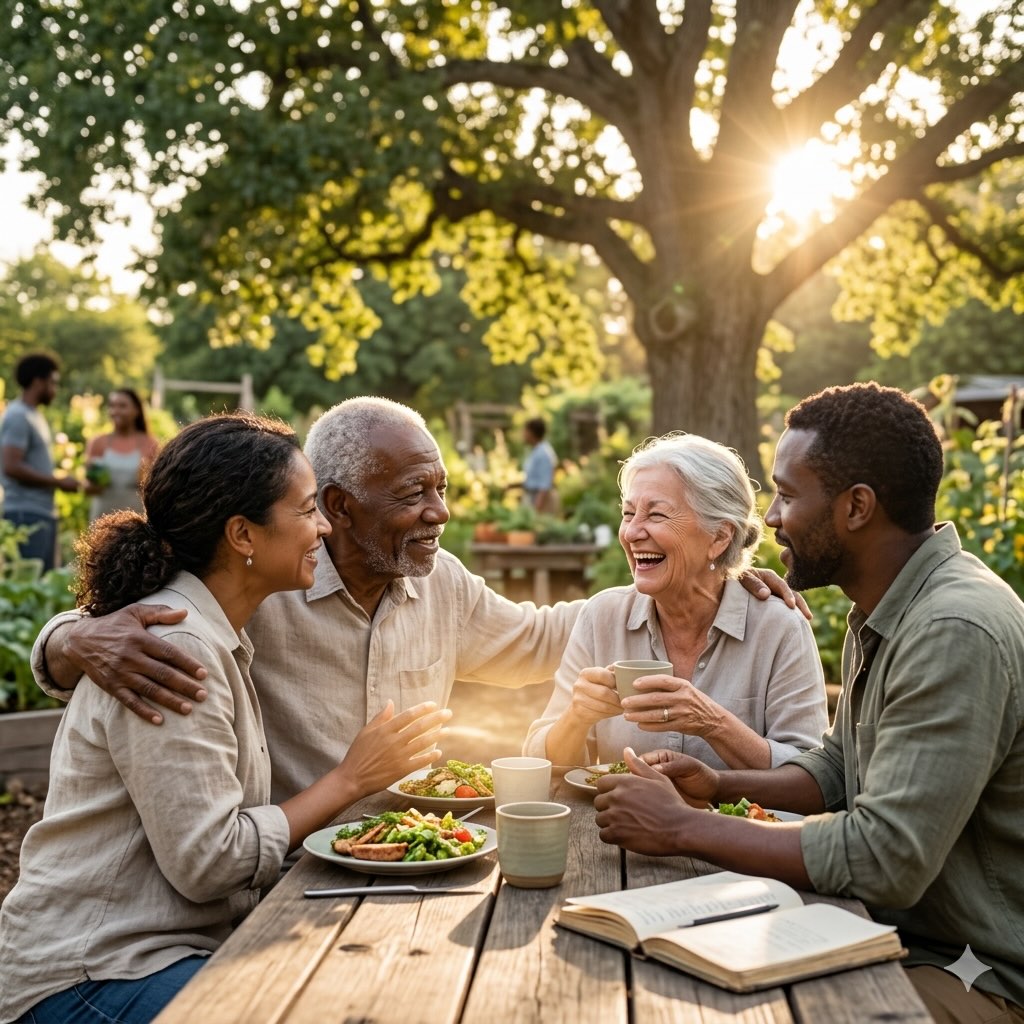
If a drug existed that could prevent chronic disease, boost immune defenses, slow cognitive decline, and extend life expectancy by nearly a decade, it would be considered the most important scientific discovery of the century. Pharmaceutical companies would invest billions in its distribution, and governments would make it mandatory. Yet, this extraordinary resource is not found in a capsule, but in the invisible web of our daily interactions. It is called social capital, and it is the pillar upon which the longest research ever conducted on human health rests: the Harvard Study of Adult Development. For over eighty years, scientists in Boston have monitored the lives of hundreds of individuals and their families, reaching a conclusion that shakes the foundations of traditional medicine: the secret to longevity does not lie exclusively in diet or fitness, but in the quality of our relationships.
Robert Waldinger, the current director of the study and a world-renowned psychiatrist, is categorical in stating that loneliness kills just as much as smoking or alcoholism. This is not a poetic metaphor, but a biochemical fact. Analyses conducted over decades of data show that people who enjoy solid social bonds exhibit significantly lower levels of systemic inflammation. Conversely, social isolation activates a permanent stress response in the body, keeping the nervous system in a constant state of alert. This "biological alarm" triggers an excessive production of cortisol, the stress hormone, which acts like a corrosive acid on the arteries and neuronal connections. In terms of secular spirituality, we could say that the "other" is not just a mirror of our soul, but the guardian of our biology.
Often, in our obsessive pursuit of personal growth, we focus on the "I": my meditation, my diet, my success. However, the science of longevity suggests that individual evolution is incomplete without opening up to the "we." Relationships act as natural emotional regulators. When we face trauma or a difficult day, the simple act of being able to share the burden with someone trusted allows the body to quickly return to a state of equilibrium, deactivating the "fight or flight" response. Without this relational outlet, the body remains stuck in a survival mode that prematurely wears down internal organs. Human connection, therefore, is the true antidote to the oxidative stress of modern life.
But what exactly do we mean by "quality relationships"? It is not about the number of friends on a social network, nor the frequency of social engagements. Quality, according to Harvard researchers, is measured by attachment security: the inner certainty of being able to count on someone in times of need. It is the depth of the bond, the shared vulnerability, and the capacity to be authentic that generate that deep sense of well-being reflected in blood tests and heart scans. In this sense, secular spirituality finds its highest expression in empathy and compassion—understood not as moral duties, but as public health practices.
Yet, we live in a paradoxical age—that of digital hyper-connectivity which hides an unprecedented famine of real intimacy. Loneliness has become a silent epidemic that transcends every age group, from "always connected" youth to isolated seniors in large metropolises. This social vacuum has a staggering economic and human cost. To reverse this trend, we must begin to consider time dedicated to others not as a luxury or a pastime, but as a fundamental investment in our health. Inviting a friend to dinner, making a sincere phone call, participating in volunteer activities, or simply exchanging kind words with a neighbor are all acts of medical prevention.
Integrating this awareness into daily life requires a radical paradigm shift. We must learn to nurture our social capital with the same consistency we use to track calories or daily steps. This is what we might call the "relationship diet." Just as we avoid ultra-processed foods to protect our gut, we should learn to limit superficial and toxic interactions that drain our energy, investing instead in relationships that nourish us. Personal growth then becomes an exercise in relational architecture: building bridges instead of walls, cultivating kindness as a muscle, and presence as a gift.
Ultimately, the results of the Harvard Study deliver a message of hope and responsibility. The key to our vitality is not hidden in an immutable genetic code, nor does it depend entirely on luck. It is written in our daily choices of proximity and care. When we look after a bond, we are actually looking after our heart, our lungs, and our mind. Longevity is a collective masterpiece, a synchronized dance between human beings who recognize and support each other. Rediscovering the sacred value of the encounter, outside of any religious dogma but in full respect of our biological nature, is perhaps the most evolutionary step we can take. Because, at the end of the journey, what determines the quality of our life is not what we have accumulated for ourselves, but how much we have been able to stay connected to the great web of life that surrounds us. Well-being is a capital that grows only if it is shared.
Robert Waldinger, the current director of the study and a world-renowned psychiatrist, is categorical in stating that loneliness kills just as much as smoking or alcoholism. This is not a poetic metaphor, but a biochemical fact. Analyses conducted over decades of data show that people who enjoy solid social bonds exhibit significantly lower levels of systemic inflammation. Conversely, social isolation activates a permanent stress response in the body, keeping the nervous system in a constant state of alert. This "biological alarm" triggers an excessive production of cortisol, the stress hormone, which acts like a corrosive acid on the arteries and neuronal connections. In terms of secular spirituality, we could say that the "other" is not just a mirror of our soul, but the guardian of our biology.
Often, in our obsessive pursuit of personal growth, we focus on the "I": my meditation, my diet, my success. However, the science of longevity suggests that individual evolution is incomplete without opening up to the "we." Relationships act as natural emotional regulators. When we face trauma or a difficult day, the simple act of being able to share the burden with someone trusted allows the body to quickly return to a state of equilibrium, deactivating the "fight or flight" response. Without this relational outlet, the body remains stuck in a survival mode that prematurely wears down internal organs. Human connection, therefore, is the true antidote to the oxidative stress of modern life.
But what exactly do we mean by "quality relationships"? It is not about the number of friends on a social network, nor the frequency of social engagements. Quality, according to Harvard researchers, is measured by attachment security: the inner certainty of being able to count on someone in times of need. It is the depth of the bond, the shared vulnerability, and the capacity to be authentic that generate that deep sense of well-being reflected in blood tests and heart scans. In this sense, secular spirituality finds its highest expression in empathy and compassion—understood not as moral duties, but as public health practices.
Yet, we live in a paradoxical age—that of digital hyper-connectivity which hides an unprecedented famine of real intimacy. Loneliness has become a silent epidemic that transcends every age group, from "always connected" youth to isolated seniors in large metropolises. This social vacuum has a staggering economic and human cost. To reverse this trend, we must begin to consider time dedicated to others not as a luxury or a pastime, but as a fundamental investment in our health. Inviting a friend to dinner, making a sincere phone call, participating in volunteer activities, or simply exchanging kind words with a neighbor are all acts of medical prevention.
Integrating this awareness into daily life requires a radical paradigm shift. We must learn to nurture our social capital with the same consistency we use to track calories or daily steps. This is what we might call the "relationship diet." Just as we avoid ultra-processed foods to protect our gut, we should learn to limit superficial and toxic interactions that drain our energy, investing instead in relationships that nourish us. Personal growth then becomes an exercise in relational architecture: building bridges instead of walls, cultivating kindness as a muscle, and presence as a gift.
Ultimately, the results of the Harvard Study deliver a message of hope and responsibility. The key to our vitality is not hidden in an immutable genetic code, nor does it depend entirely on luck. It is written in our daily choices of proximity and care. When we look after a bond, we are actually looking after our heart, our lungs, and our mind. Longevity is a collective masterpiece, a synchronized dance between human beings who recognize and support each other. Rediscovering the sacred value of the encounter, outside of any religious dogma but in full respect of our biological nature, is perhaps the most evolutionary step we can take. Because, at the end of the journey, what determines the quality of our life is not what we have accumulated for ourselves, but how much we have been able to stay connected to the great web of life that surrounds us. Well-being is a capital that grows only if it is shared.