


Algae on the Plate: The Sustainable Superfood Reshaping the Future of Natural Eating
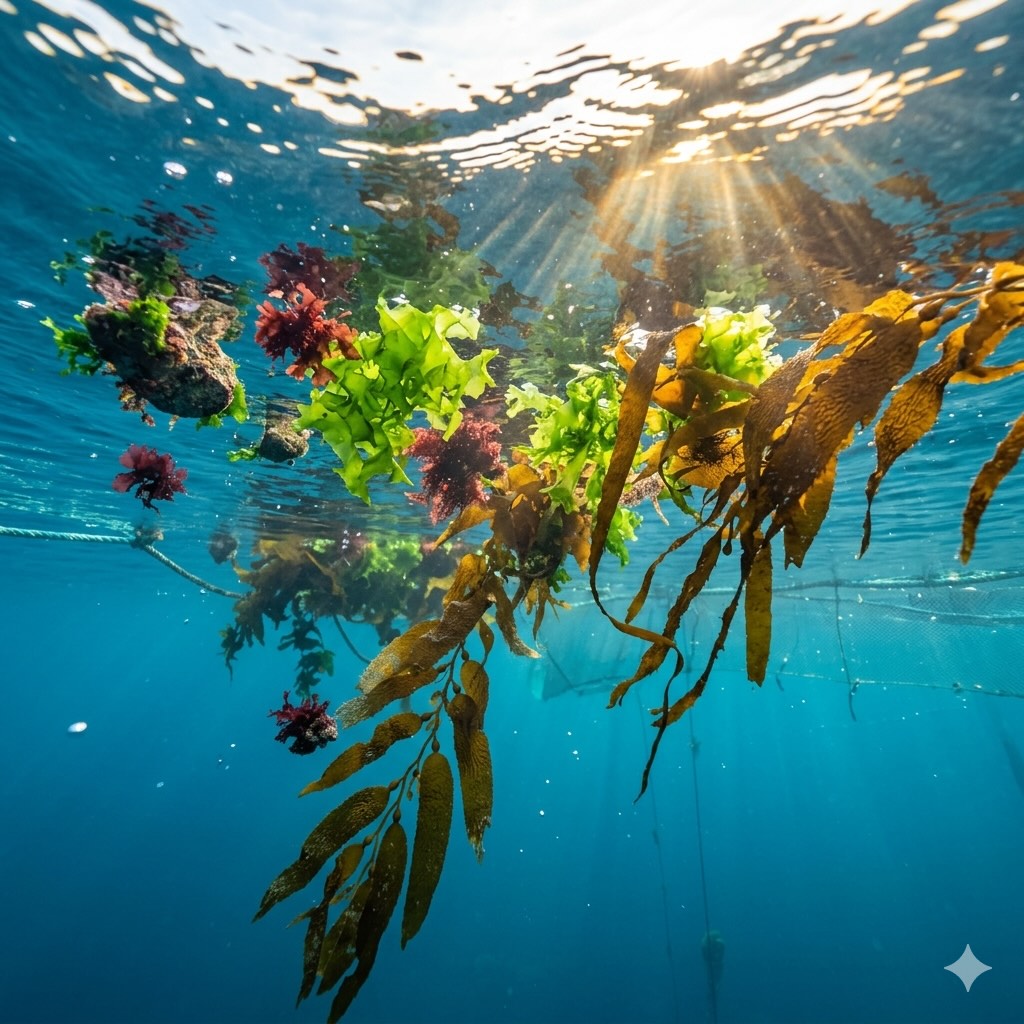
The Faroe Islands, in the North Sea, host one of the most ambitious projects in recent years to transform algae into a global food resource. The SeaMark project, funded with nine million euros by the European Union under Horizon Europe, aims to develop aquaculture and algae processing facilities — primarily for Saccharina latissima — to produce over 12 types of products: flours for meat substitutes, raw materials for cosmetics and nutraceuticals, animal feed, and eco-friendly packaging materials. Coordinated by the Dutch University of Wageningen and the Danish University of Aarhus, the project involves 25 members including Nofima and the Carlsberg group, with the goal of demonstrating that zero-emission aquaculture is possible, profitable, and capable of creating jobs for local populations.
The goal of SeaMark goes beyond commercial interests: it aims to radically change European culture toward algae, presenting them as a precious source of proteins, minerals, and trace elements that is far less polluting than even soy cultivation. Macroalgae are capable of helping the sea regenerate, absorbing CO₂ from the atmosphere, and providing dietary fibers, fermented for plant-based meat substitutes, alginates for the food, cosmetic, and pharmaceutical industries, as well as concentrated proteins, minerals, and vitamins.
Israel has taken a parallel but equally innovative path. Researchers from Tel Aviv University and the National Oceanographic and Immunological Institute of Israel have tested a new type of integrated cultivation with fish farming, demonstrating that environmental conditions are advantageous for the ecosystem and make macroalgae a true superfood. The system has been tested on the most common algae species of the genera Ulva, Gracilaria, and Hypnea, grown near aquaculture facilities where they absorbed nutrients released by fish.
By calibrating fish feed, researchers have managed to produce algae enriched with iodine, zinc, iron, proteins, calcium, magnesium, antioxidants, and pigments, ideal for both populations suffering from malnutrition and for vegans and vegetarians, who often risk nutritional deficiencies. From an environmental standpoint, unlike field agriculture, there is no consumption of fresh water or soil, no fertilizers are needed because the function is fulfilled by fish waste — phosphates, ammonia, and nitrates — which, in this way, do not overload surrounding waters and do not increase the risk of eutrophication. Algae grow with extraordinary efficiency, up to 25% per day, and are much less affected by external weather conditions than terrestrial crops, a crucial advantage in an era of increasingly extreme climate events.
Algae are good for humans and for the planet: they can represent an alternative food source and a tool to create low-impact environmental products such as bioplastics, contributing to preserving health and the marine ecosystem by reducing the presence of CO₂, phosphorus, and nitrogen in waters. Widely used in ethnic cuisines, especially Asian, algae are still little used in Europe, although consumed and appreciated especially within vegan, vegetarian, or plant-based dietary regimes.
Calling them simply "algae" is generic: there are various species characterized by different color, organoleptic and nutritional properties, and different uses in culinary art. Brown algae, such as kombu, are an ingredient in dashi, a typical Japanese broth; red algae, such as nori, are used to prepare sushi rolls; among green algae is sea lettuce. A limitation to their consumption could be represented by taste: umami, a rather savory flavor conferred by the interaction of molecules such as glutamic acid with nucleotides such as guanylates, inosinates, sodium, and potassium, naturally present in varying amounts depending on algae types and in other ethnic products like shiitake mushrooms and fermented products like miso and soy sauce.
United by low caloric intake, the nutritional component varies from algae to algae, also influenced by cultivation methods, harvesting, and seasonality. Protein content can range from 5 to 19% in brown algae, from 0.67% to 45% in red algae, and from 3.42% to 29.80% in green algae, with a good amino acid supply per gram, very similar to meat. PUFA fatty acids can range from 6.7% in Ulva lactuca to 69.1% in Undaria pinnatifida, although the overall fat intake tends to be low compared to total dry weight, higher in winter and lower in summer.
Regarding fiber, five grams of brown algae can provide up to 14% of the recommended daily fiber, while in vitro studies seem to suggest prebiotic effects associated with fermentation of certain components at the colon level and production of short-chain fatty acids. In some algae, the presence of alginates, molecules with thickening properties, could act on appetite control by increasing the feeling of satiety. Last but not least, and in varying amounts depending on the type, algae are a source of polyphenols, minerals, and vitamins such as vitamin A and B12 in the case of nori algae.
Like fish, algae can also be contaminated by possible heavy metals: arsenic, aluminum, cadmium, lead, silicon, strontium, and tin are agents present in waters and the marine habitat. Finally, caution is advised in case of thyroid disorders, heart disease, and kidney disease: the presence of iodine, absorbed from seawater, or potassium could represent a contraindication or an indication for limited consumption.
Given the multiple properties of algae, the prospect could open up to exploit some extracts in nutraceuticals and in the preparation of specific supplements. Nutritional benefits and efficacy of bioactive components, however, will need to be investigated with further intervention studies.
The European Commission and the European Climate, Infrastructure and Environment Executive Agency (CINEA) are implementing a European platform, EU4Algae, which will involve the entire sector supply chain to evaluate its possible uses from a global health perspective: human and environmental. Microalgae could become a precious source of biomass thanks to new processes that improve photosynthesis, favoring industrial-scale use using sustainable processes to produce new foods and high-value products for human health, such as antioxidants, omega-3, or even drugs and vaccines.
The algae sector has clear growth potential beyond current markets and can contribute to shaping a world free from poverty on a livable planet. Eating algae can provide several benefits, including better thyroid function, better gastrointestinal function, lower cardiovascular risk, and better blood sugar control with consequent lower risk of type 2 diabetes.
Algae therefore represent an fascinating frontier for those seeking natural, conscious, and sustainable eating. It is no coincidence that more and more chefs, researchers, and producers are looking to the sea not only as a source of fish, but as a true underwater garden capable of nourishing future generations without compromising the planet's balance.
The goal of SeaMark goes beyond commercial interests: it aims to radically change European culture toward algae, presenting them as a precious source of proteins, minerals, and trace elements that is far less polluting than even soy cultivation. Macroalgae are capable of helping the sea regenerate, absorbing CO₂ from the atmosphere, and providing dietary fibers, fermented for plant-based meat substitutes, alginates for the food, cosmetic, and pharmaceutical industries, as well as concentrated proteins, minerals, and vitamins.
Israel has taken a parallel but equally innovative path. Researchers from Tel Aviv University and the National Oceanographic and Immunological Institute of Israel have tested a new type of integrated cultivation with fish farming, demonstrating that environmental conditions are advantageous for the ecosystem and make macroalgae a true superfood. The system has been tested on the most common algae species of the genera Ulva, Gracilaria, and Hypnea, grown near aquaculture facilities where they absorbed nutrients released by fish.
By calibrating fish feed, researchers have managed to produce algae enriched with iodine, zinc, iron, proteins, calcium, magnesium, antioxidants, and pigments, ideal for both populations suffering from malnutrition and for vegans and vegetarians, who often risk nutritional deficiencies. From an environmental standpoint, unlike field agriculture, there is no consumption of fresh water or soil, no fertilizers are needed because the function is fulfilled by fish waste — phosphates, ammonia, and nitrates — which, in this way, do not overload surrounding waters and do not increase the risk of eutrophication. Algae grow with extraordinary efficiency, up to 25% per day, and are much less affected by external weather conditions than terrestrial crops, a crucial advantage in an era of increasingly extreme climate events.
Algae are good for humans and for the planet: they can represent an alternative food source and a tool to create low-impact environmental products such as bioplastics, contributing to preserving health and the marine ecosystem by reducing the presence of CO₂, phosphorus, and nitrogen in waters. Widely used in ethnic cuisines, especially Asian, algae are still little used in Europe, although consumed and appreciated especially within vegan, vegetarian, or plant-based dietary regimes.
Calling them simply "algae" is generic: there are various species characterized by different color, organoleptic and nutritional properties, and different uses in culinary art. Brown algae, such as kombu, are an ingredient in dashi, a typical Japanese broth; red algae, such as nori, are used to prepare sushi rolls; among green algae is sea lettuce. A limitation to their consumption could be represented by taste: umami, a rather savory flavor conferred by the interaction of molecules such as glutamic acid with nucleotides such as guanylates, inosinates, sodium, and potassium, naturally present in varying amounts depending on algae types and in other ethnic products like shiitake mushrooms and fermented products like miso and soy sauce.
United by low caloric intake, the nutritional component varies from algae to algae, also influenced by cultivation methods, harvesting, and seasonality. Protein content can range from 5 to 19% in brown algae, from 0.67% to 45% in red algae, and from 3.42% to 29.80% in green algae, with a good amino acid supply per gram, very similar to meat. PUFA fatty acids can range from 6.7% in Ulva lactuca to 69.1% in Undaria pinnatifida, although the overall fat intake tends to be low compared to total dry weight, higher in winter and lower in summer.
Regarding fiber, five grams of brown algae can provide up to 14% of the recommended daily fiber, while in vitro studies seem to suggest prebiotic effects associated with fermentation of certain components at the colon level and production of short-chain fatty acids. In some algae, the presence of alginates, molecules with thickening properties, could act on appetite control by increasing the feeling of satiety. Last but not least, and in varying amounts depending on the type, algae are a source of polyphenols, minerals, and vitamins such as vitamin A and B12 in the case of nori algae.
Like fish, algae can also be contaminated by possible heavy metals: arsenic, aluminum, cadmium, lead, silicon, strontium, and tin are agents present in waters and the marine habitat. Finally, caution is advised in case of thyroid disorders, heart disease, and kidney disease: the presence of iodine, absorbed from seawater, or potassium could represent a contraindication or an indication for limited consumption.
Given the multiple properties of algae, the prospect could open up to exploit some extracts in nutraceuticals and in the preparation of specific supplements. Nutritional benefits and efficacy of bioactive components, however, will need to be investigated with further intervention studies.
The European Commission and the European Climate, Infrastructure and Environment Executive Agency (CINEA) are implementing a European platform, EU4Algae, which will involve the entire sector supply chain to evaluate its possible uses from a global health perspective: human and environmental. Microalgae could become a precious source of biomass thanks to new processes that improve photosynthesis, favoring industrial-scale use using sustainable processes to produce new foods and high-value products for human health, such as antioxidants, omega-3, or even drugs and vaccines.
The algae sector has clear growth potential beyond current markets and can contribute to shaping a world free from poverty on a livable planet. Eating algae can provide several benefits, including better thyroid function, better gastrointestinal function, lower cardiovascular risk, and better blood sugar control with consequent lower risk of type 2 diabetes.
Algae therefore represent an fascinating frontier for those seeking natural, conscious, and sustainable eating. It is no coincidence that more and more chefs, researchers, and producers are looking to the sea not only as a source of fish, but as a true underwater garden capable of nourishing future generations without compromising the planet's balance.