


The Symphony of Circadian Rhythms: How Natural Light Reprograms the Biological Clock and Emotional Life
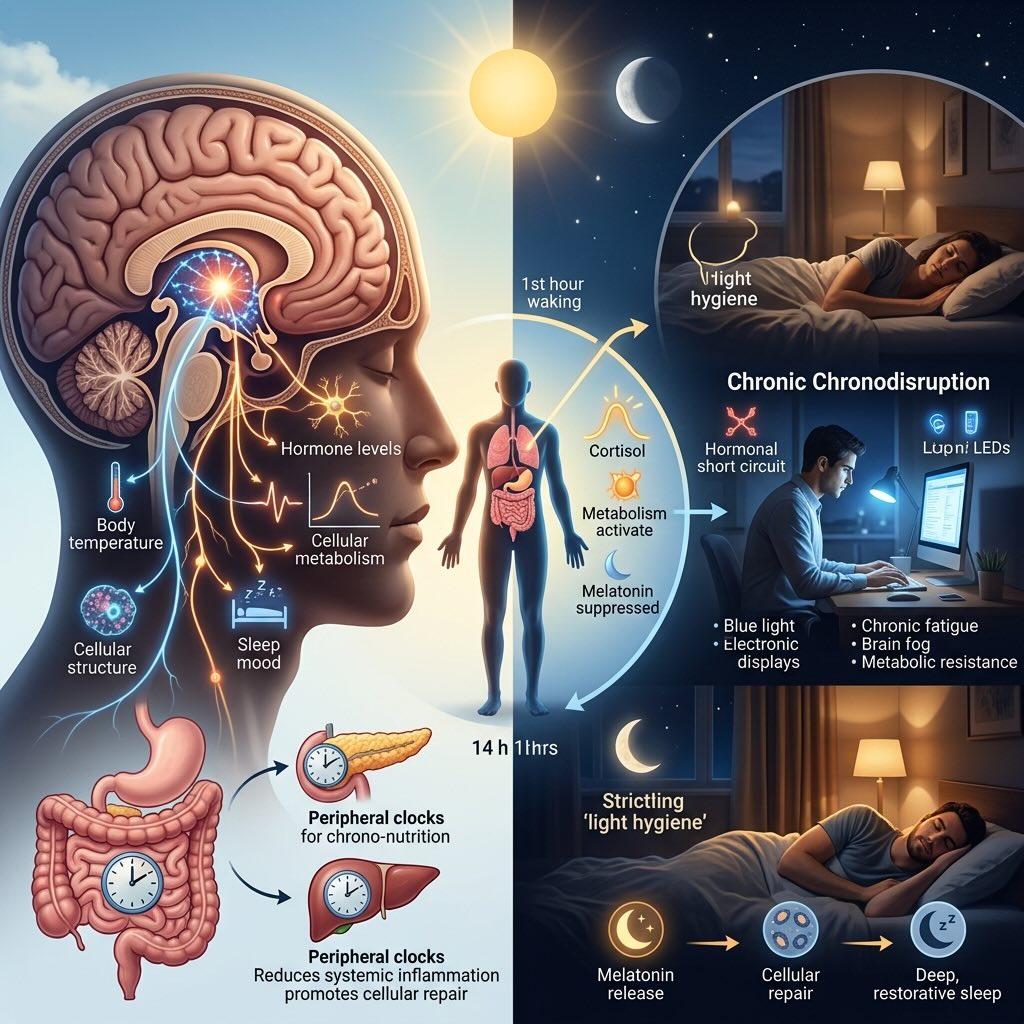
At the heart of our brain, located in the hypothalamus, ticks a central biological clock composed of about twenty thousand neurons. This tiny control center, known as the suprachiasmatic nucleus, coordinates the timing of nearly all physiological functions of the human organism: from hormone secretion to body temperature, from cellular metabolism to sleep architecture, and even mood regulation. For millennia, this mechanism operated in perfect synchrony with the natural succession of day and night. However, the advent of modern life, where over ninety percent of time is spent indoors under artificial lighting, has disrupted this ancestral equilibrium, giving rise to a condition known as chronic chronodisruption. The latest discoveries in chronobiology and clinical neuroscience demonstrate that restoring circadian alignment through conscious light management represents one of the most powerful and underrated pillars for achieving deep psychophysical well-being.
The fundamental mechanism through which the external environment communicates with our internal clock resides in a specialized class of retinal cells called intrinsically photosensitive retinal ganglion cells. These cells do not participate in visual image formation, but specifically respond to the frequency and intensity of ambient light, sending a direct electrical signal to the suprachiasmatic nucleus. When morning sunlight hits the retina, the presence of blue wavelengths triggers the immediate suppression of melatonin—the hormone of darkness—and prompts a physiological surge in cortisol. This morning cortisol spike should not be confused with negative stress; on the contrary, it is an indispensable biological signal that awakens the organism, activates metabolism, enhances mental focus, and starts an internal timer that will determine, approximately fourteen hours later, the evening release of melatonin needed for deep, restorative sleep.
Conversely, the lack of adequate sunlight exposure during the early hours of the day, combined with excessive artificial lighting in the evening, creates a severe misalignment in biological rhythms. Exposure to electronic displays and LED lights before bedtime deceives the brain into believing it is still broad daylight. The result is a drastic inhibition of melatonin, which is not merely a sleep regulator, but also one of the most potent antioxidants and neuroprotective agents available to the body. This hormonal short-circuit directly impacts quality of life, fostering chronic fatigue, brain fog, mood disorders, metabolic resistance, and an increased vulnerability to daily stress.
The rediscovery of circadian synchronization offers remarkably simple and effective practical tools for improving overall health. Experts indicate that the most impactful action is exposing oneself to natural light within the first hour of waking, spending ten to thirty minutes outdoors, even under overcast skies. Outdoor solar radiance is hundreds of times more intense than any indoor or office lighting. This simple habit resets the biological clock's starting point, stabilizing energy production throughout the day and laying the foundation for superior night-time rest. Concurrently, during the afternoon and evening, adopting strict "light hygiene"—through the use of warm, dimmed lighting and a drastic reduction of digital screens in the two hours leading up to sleep—allows the parasympathetic nervous system to regain control, facilitating the transition toward restorative rest.
The impact of chronobiology extends far beyond simple rest, influencing nutrition and cognitive performance through what is known as chrono-nutrition. Our digestive system, pancreas, and liver possess peripheral biological clocks that operate at peak efficiency during daylight hours. Consuming food in harmony with these rhythms—concentrating caloric intake during daylight hours and honoring a night-time fasting window of at least twelve hours—enables the body to optimize insulin sensitivity, reduce systemic inflammation levels, and promote cellular repair processes. Synchronizing with nature thus ceases to be an abstract concept and transforms into a precise neurobiological strategy: reclaiming the rhythms of light and shadow means restoring the body's original intelligence, elevating vitality, and recovering a stable, lasting inner harmony.
The fundamental mechanism through which the external environment communicates with our internal clock resides in a specialized class of retinal cells called intrinsically photosensitive retinal ganglion cells. These cells do not participate in visual image formation, but specifically respond to the frequency and intensity of ambient light, sending a direct electrical signal to the suprachiasmatic nucleus. When morning sunlight hits the retina, the presence of blue wavelengths triggers the immediate suppression of melatonin—the hormone of darkness—and prompts a physiological surge in cortisol. This morning cortisol spike should not be confused with negative stress; on the contrary, it is an indispensable biological signal that awakens the organism, activates metabolism, enhances mental focus, and starts an internal timer that will determine, approximately fourteen hours later, the evening release of melatonin needed for deep, restorative sleep.
Conversely, the lack of adequate sunlight exposure during the early hours of the day, combined with excessive artificial lighting in the evening, creates a severe misalignment in biological rhythms. Exposure to electronic displays and LED lights before bedtime deceives the brain into believing it is still broad daylight. The result is a drastic inhibition of melatonin, which is not merely a sleep regulator, but also one of the most potent antioxidants and neuroprotective agents available to the body. This hormonal short-circuit directly impacts quality of life, fostering chronic fatigue, brain fog, mood disorders, metabolic resistance, and an increased vulnerability to daily stress.
The rediscovery of circadian synchronization offers remarkably simple and effective practical tools for improving overall health. Experts indicate that the most impactful action is exposing oneself to natural light within the first hour of waking, spending ten to thirty minutes outdoors, even under overcast skies. Outdoor solar radiance is hundreds of times more intense than any indoor or office lighting. This simple habit resets the biological clock's starting point, stabilizing energy production throughout the day and laying the foundation for superior night-time rest. Concurrently, during the afternoon and evening, adopting strict "light hygiene"—through the use of warm, dimmed lighting and a drastic reduction of digital screens in the two hours leading up to sleep—allows the parasympathetic nervous system to regain control, facilitating the transition toward restorative rest.
The impact of chronobiology extends far beyond simple rest, influencing nutrition and cognitive performance through what is known as chrono-nutrition. Our digestive system, pancreas, and liver possess peripheral biological clocks that operate at peak efficiency during daylight hours. Consuming food in harmony with these rhythms—concentrating caloric intake during daylight hours and honoring a night-time fasting window of at least twelve hours—enables the body to optimize insulin sensitivity, reduce systemic inflammation levels, and promote cellular repair processes. Synchronizing with nature thus ceases to be an abstract concept and transforms into a precise neurobiological strategy: reclaiming the rhythms of light and shadow means restoring the body's original intelligence, elevating vitality, and recovering a stable, lasting inner harmony.